Best Office Chair for Short People: Fit Guide
Choosing an office chair if you are about 5'0" to 5'4": lowest seat height, seat depth, armrest range, footrests and desk height, with three Steelcase picks.
At a glance
For a short adult, look for the lowest seat height and an adjustable seat depth. The Steelcase Leap starts at 15.5 inches, the Steelcase Gesture at 16 inches, and the Steelcase Series 1 at 16.5 inches. Use a footrest if your feet still do not reach the floor.
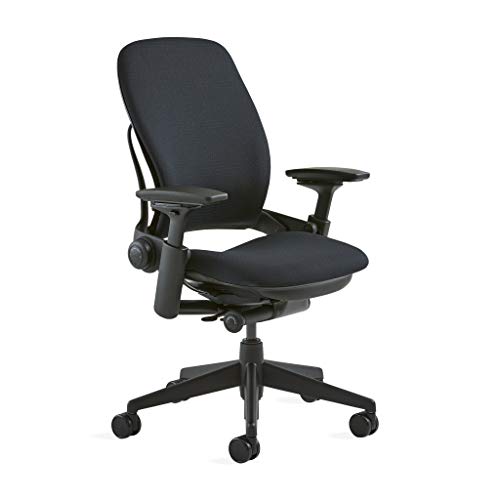


If your feet dangle or the front edge of the seat hits the back of your knees, the chair is probably too big for you. Many office chairs are sized for an average user, and the numbers on their spec sheets show quickly whether they will fit someone around 5’0” to 5’4”. Three hardware figures decide it: the lowest seat height, the seat depth range and the lowest arm height. A fourth, your desk height, decides what to do when the chair cannot go low enough.
We do not test chairs. Everything below comes from the makers’ pages and spec sheets and from OSHA’s computer workstation guidance, and we flag figures that came from older sheets. This is a fit and hardware guide only, and it makes no health claims. For the full lineup, see our best office chairs of 2026 comparison.
This product is not a medical device and does not replace advice from a healthcare professional. Read the manufacturer's instructions before first use.
Step 1: Measure Yourself Before You Shop
Take two measurements, in the shoes you wear at your desk.
- Floor to the back of your knee, sitting with your lower legs vertical. OSHA says the chair height is right when the entire sole of the foot can rest on the floor, and that the back of the knee should sit slightly higher than the seat. That measurement is the seat height you want, give or take a little for the cushion.
- Back of your knee to your lower back, sitting upright against a wall. This is your usable seat depth. OSHA says the seat pan should be depth adjustable so shorter users can keep their backs against the backrest, and so there is no contact between the back of the knee and the front edge of the seat.
Write both numbers down. Then compare them with the chair’s lowest seat height and its shallowest seat depth.
Step 2: Compare the Lowest Seat Height
Chair pages do not always show the full seat height range. These are the lowest figures we found.
| Chair | Lowest seat height | Source |
|---|---|---|
| Steelcase Leap | 15.5 inches | Steelcase spec guide, October 2020 |
| Steelcase Gesture | 16 inches | Steelcase brochure, 2015 edition |
| Steelcase Series 1 | 16.5 inches | Steelcase sheet, older edition |
The Leap goes lowest. Steelcase’s guide also lists a 7 inch cylinder range as an option, which is meant for a different need, so check which cylinder your listing includes. The current Steelcase product pages for the Gesture and the Series 1 do not repeat the seat height numbers, so confirm them with the seller. The listings we point to for the Steelcase chairs are labeled for carpet floors.
Several chairs in our lineup are sized for taller users, and we would not choose them for a short buyer. Secretlab lists the Titan Evo XL for 5’11” to 6’9”, with a floor to seat base range of 18.9 to 22.5 inches. FlexiSpot lists a recommended height of 5’10” to 6’10” for the C7, and its page gives a seat height of 18.31 to 21.65 inches in one block and different figures in another. Both are higher than the Steelcase minimums above.
Hbada lists a recommended height range of 5’1” to 6’5” and 330 lb for the E3 Pro 2026 Edition, which includes the short end. The page we read does not state a seat height range in inches, so you would need the manual or the listing before relying on it. See the Hbada E3 Pro profile.
Step 3: Check the Seat Depth Range
A seat that is too deep pushes you forward, away from the backrest. Steelcase publishes these functional seat depth ranges.
- Leap: 15.75 to 18.75 inches, a 3 inch range.
- Gesture: 15.75 to 18.5 inches.
- Series 1: 15.75 to 18 inches.
All three start at 15.75 inches, so they are the same at the shallow end. The Leap offers the most travel. If your measured seat depth is under 15.75 inches, none of these will fit you well, so look at other chairs. The Titan Evo XL, by comparison, lists a seat depth of 19.7 inches.
Step 4: Check the Armrests
OSHA says armrests should be low enough that the shoulders relax and high enough to support the lower arms, and that they should be removed if they cannot be adjusted properly or if they interfere with the workstation. These are Steelcase’s armrest height ranges, measured from the seat.
- Leap: 7 to 11 inches. Steelcase’s guide lists 4D arms that also adjust in width, depth and pivot.
- Gesture: 7.25 to 11.5 inches. The width between the arms ranges from 10.25 to 22.5 inches, which lets you pull them in close.
- Series 1: 6.5 to 11.5 inches, the lowest start of the three, with height, width, pivot and depth adjustment.
Also check that the arms clear the edge of your desk so you can roll in close. If they cannot be set properly, OSHA’s advice is to remove them or choose a chair whose arms do adjust.
Step 5: Solve the Desk Height Problem
A fixed desk is the other half of the equation. OSHA says that if the seat cannot be lowered without raising the keyboard or monitor too high, you should use a footrest instead of lowering the chair further. That is the usual answer for a short person at a standard desk: raise the seat to the keyboard, then add a footrest for your feet.
Here is the order we suggest.
- Set the seat height so your forearms are about level with the keyboard.
- If your feet no longer reach the floor, add a footrest. OSHA says a footrest gives stable foot support when the seat cannot be lowered.
- Set the seat depth so you can sit back against the backrest without the seat edge touching the back of your knee.
- Set the arms last.
OSHA also says a chair should have a five-legged base with casters matched to the floor. On hard floors, use a mat or soft casters.
Steelcase Leap: The Lowest Seat in Our Lineup
Steelcase lists a seat that starts at 15.5 inches, a 3 inch seat depth range and arms from 7 inches above the seat. The most room to set up for a smaller frame.
The Leap has the lowest seat height of the chairs we compared, the widest seat depth range and the most adjustment overall. Steelcase’s spec guide also lists a 5 inch lumbar height range and a flexible seat edge. It is rated by Steelcase for up to 400 lbs and carries the Limited Lifetime warranty covering 12 years, multi-shift, 24/7 parts and labor. It is a premium chair with many controls. Read the Steelcase Leap profile.
Steelcase Gesture: Arms You Can Pull In Close
A 16 inch minimum seat height, 360-degree arms that adjust from 10.25 to 22.5 inches apart, and simple knob controls. Good for a smaller buyer who uses several devices.
Steelcase’s page says the arms adjust through a full range of motion, and the brochure lists arm height from 7.25 to 11.5 inches. The seat is 20 inches wide in the brochure, which is wider than the Leap’s, so make sure the width suits you. The seat height starts at 16 inches. The brochure also lists an overall width of 22.375 to 34.625 inches, so measure your space. See the Steelcase Gesture profile.
Steelcase Series 1: The Simpler Option
Arms that start 6.5 inches above the seat, a 16.5 inch minimum seat height and a weight-activated recline, with fewer controls to learn.
Steelcase’s older sheet lists a seat height of 16.5 to 21.5 inches, a functional seat depth of 15.75 to 18 inches and arm height from 6.5 to 11.5 inches. The Series 1 starts higher than the Leap and Gesture, so a footrest may be needed. Steelcase’s page lists up to 400 lbs and the same warranty. Read the Steelcase Series 1 profile.
Quick Picks
- Lowest seat and most depth range: Steelcase Leap.
- Arms pulled in for a laptop and a phone: Steelcase Gesture.
- Fewer controls, lowest arm start: Steelcase Series 1.
- Shopping for a mesh chair: check the Hbada E3 Pro manual for a seat height first, because the page we read does not give one.
Sources
- OSHA Computer Workstations eTool: Chairs
- Steelcase Leap official product page
- Steelcase Seating Specification Guide, October 2020, Leap pages (PDF)
- Steelcase Gesture official product page
- Steelcase Gesture brochure, 2015 edition (PDF copy)
- Steelcase Series 1 official product page
- Steelcase Series 1 specification sheet (PDF)
- Secretlab Titan Evo product and specifications page, Secretlab US
- HBADA E3 Pro Ergonomic Office Chair 2026 Edition, Hbada official product page
- FlexiSpot C7 Premium Ergonomic Office Chair, FlexiSpot product page
Frequently asked questions
What seat height should a short person look for?
Look for the lowest seat height in the maker's spec sheet. Steelcase's spec guide lists 15.5 inches for the Leap, its 2015 brochure lists 16 inches for the Gesture, and its older sheet lists 16.5 inches for the Series 1. Compare the number with the distance from the floor to the back of your knee, measured in the shoes you wear at your desk.
My feet do not reach the floor. What can I do?
OSHA's workstation guidance says the chair height is right when the entire sole of the foot can rest on the floor. It says to use a footrest when the seat cannot be lowered enough without raising the keyboard or monitor too high. A chair with a lower minimum seat height reduces the need for one.
Does seat depth matter for a short person?
Yes. OSHA says the seat pan should be depth adjustable so shorter users can keep their backs supported and avoid contact between the back of the knee and the front edge of the seat. Steelcase lists a functional seat depth of 15.75 to 18.75 inches for the Leap, 15.75 to 18.5 for the Gesture and 15.75 to 18 for the Series 1.
Are most office chairs too big for short users?
Some are sized for taller people. Secretlab lists its Titan Evo XL for users from 5'11" to 6'9", and FlexiSpot lists the C7 for 5'10" to 6'10". Check the maker's recommended height range, and the lowest seat height, before you order.
How low do armrests go?
Steelcase's spec sheets list armrests that start at 7 inches above the seat on the Leap, 7.25 inches on the Gesture and 6.5 inches on the Series 1. OSHA says armrests should be low enough that your shoulders relax and high enough to support your lower arms, and that they can be removed if they cannot be adjusted properly.
Is there a chair made for short women?
The maker pages we read do not sell any of these chairs by gender. They list adjustments and sizes, so use the numbers: the lowest seat height, the seat depth range and the lowest arm height.